
Last updated August 25, 2026
Free on-site gate assessment - hinges, posts, and your LiftMaster or Nice gate operator checked before anything is quoted
The assessment is free and the quote is the invoice.

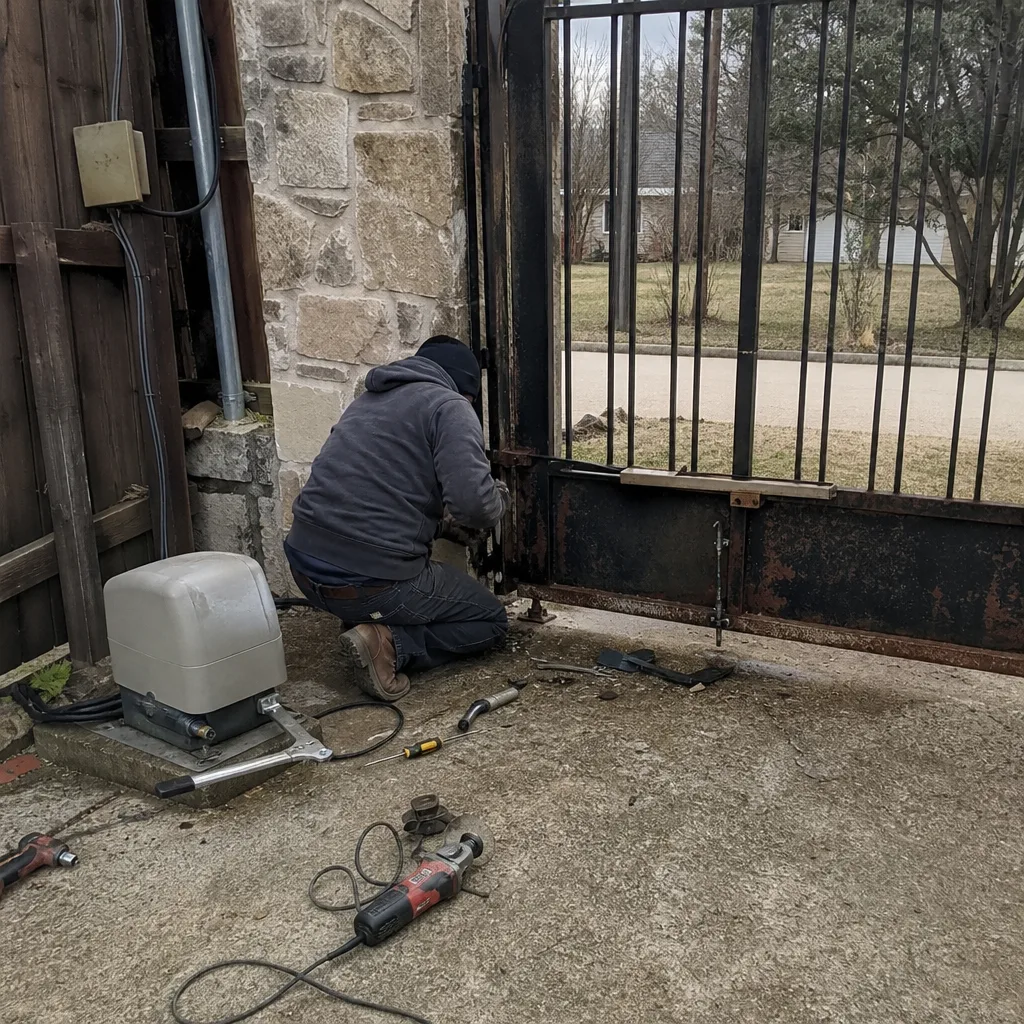 Before
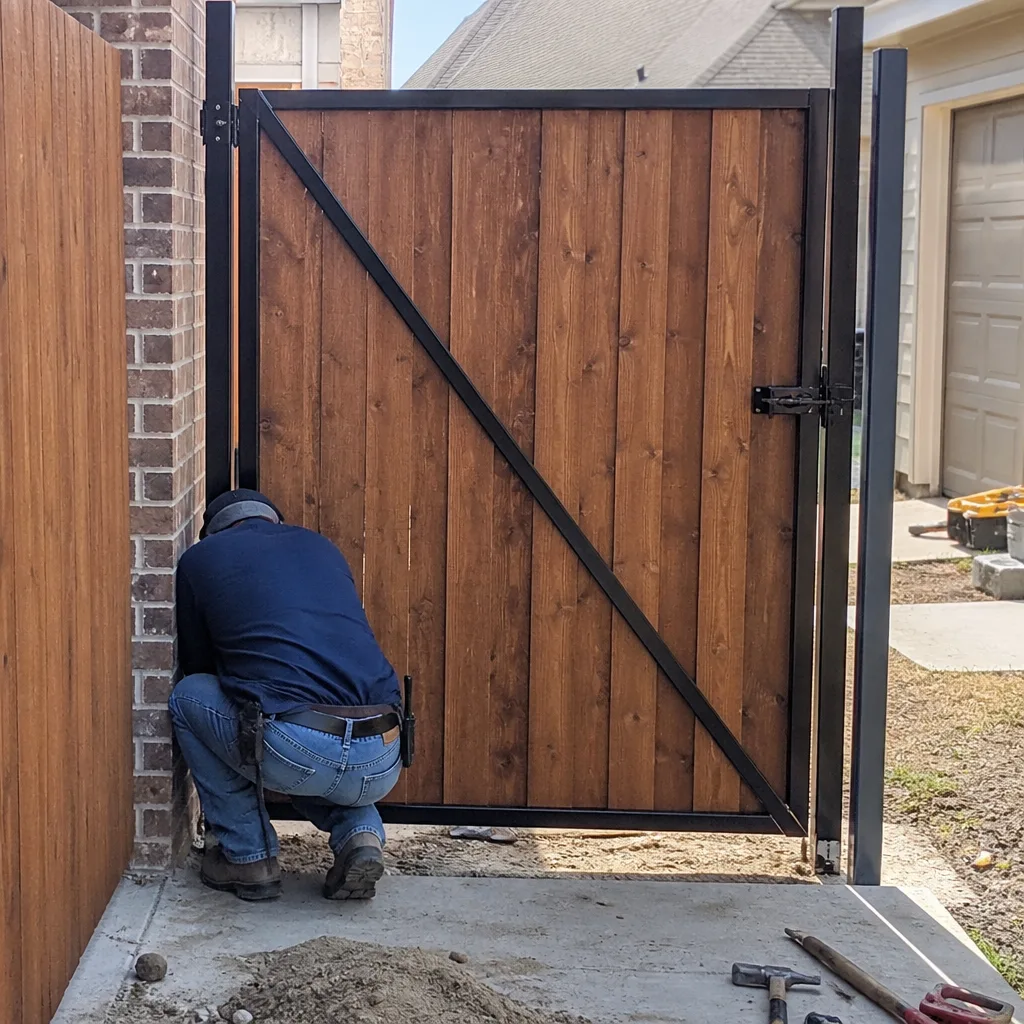 After
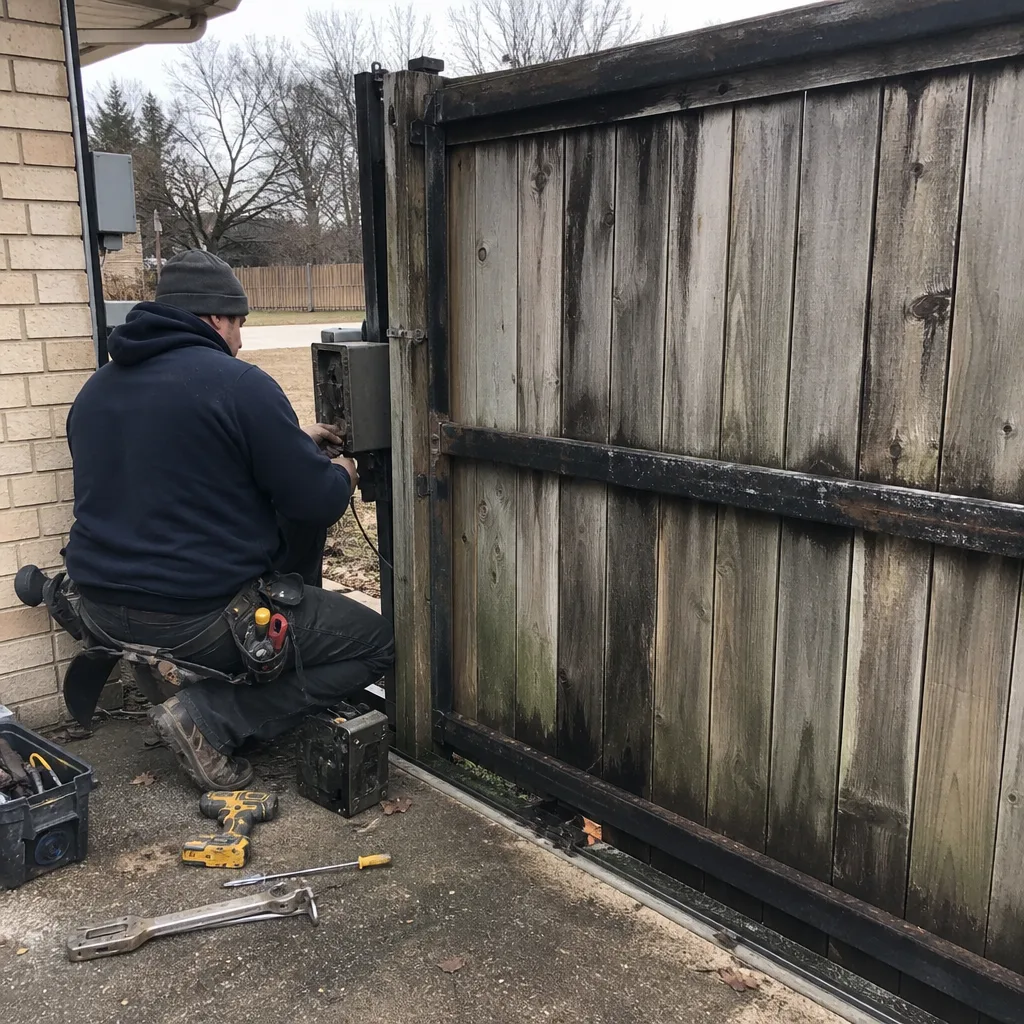 Before
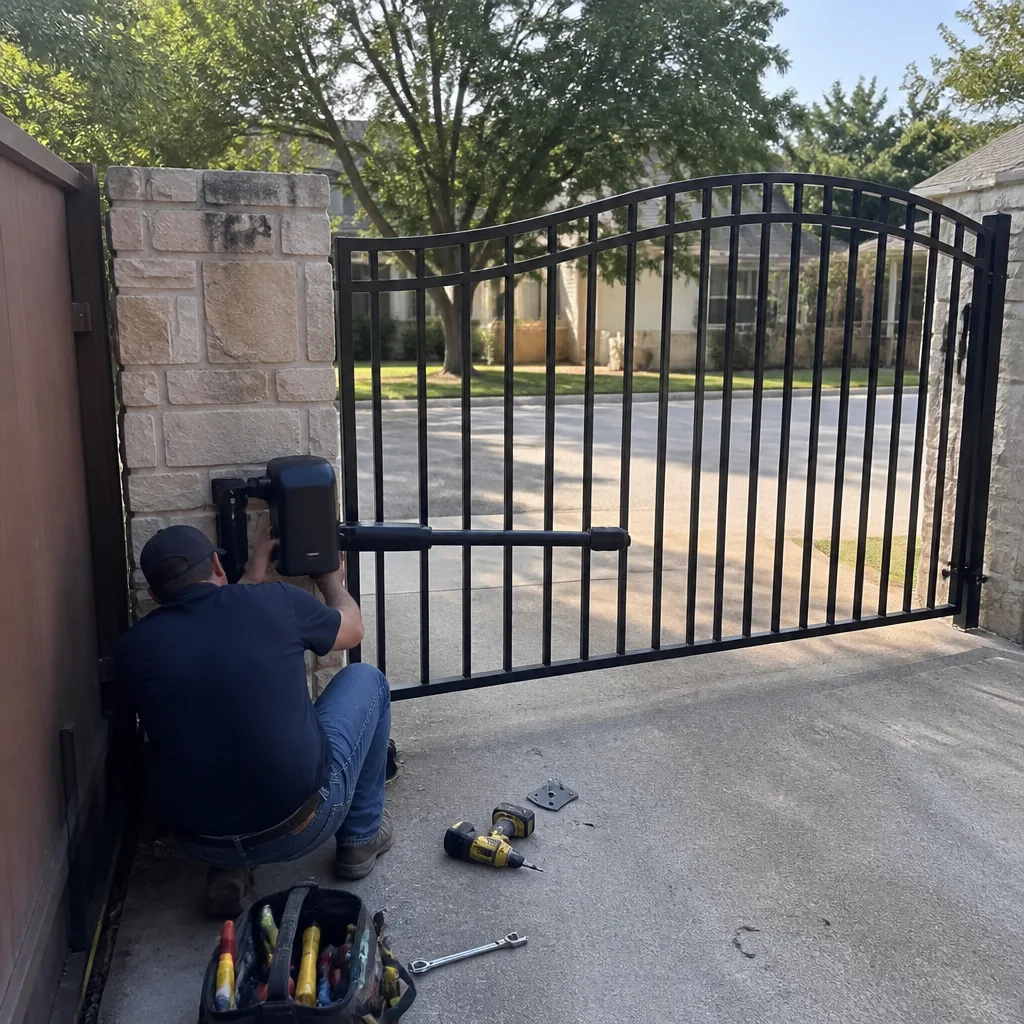 After
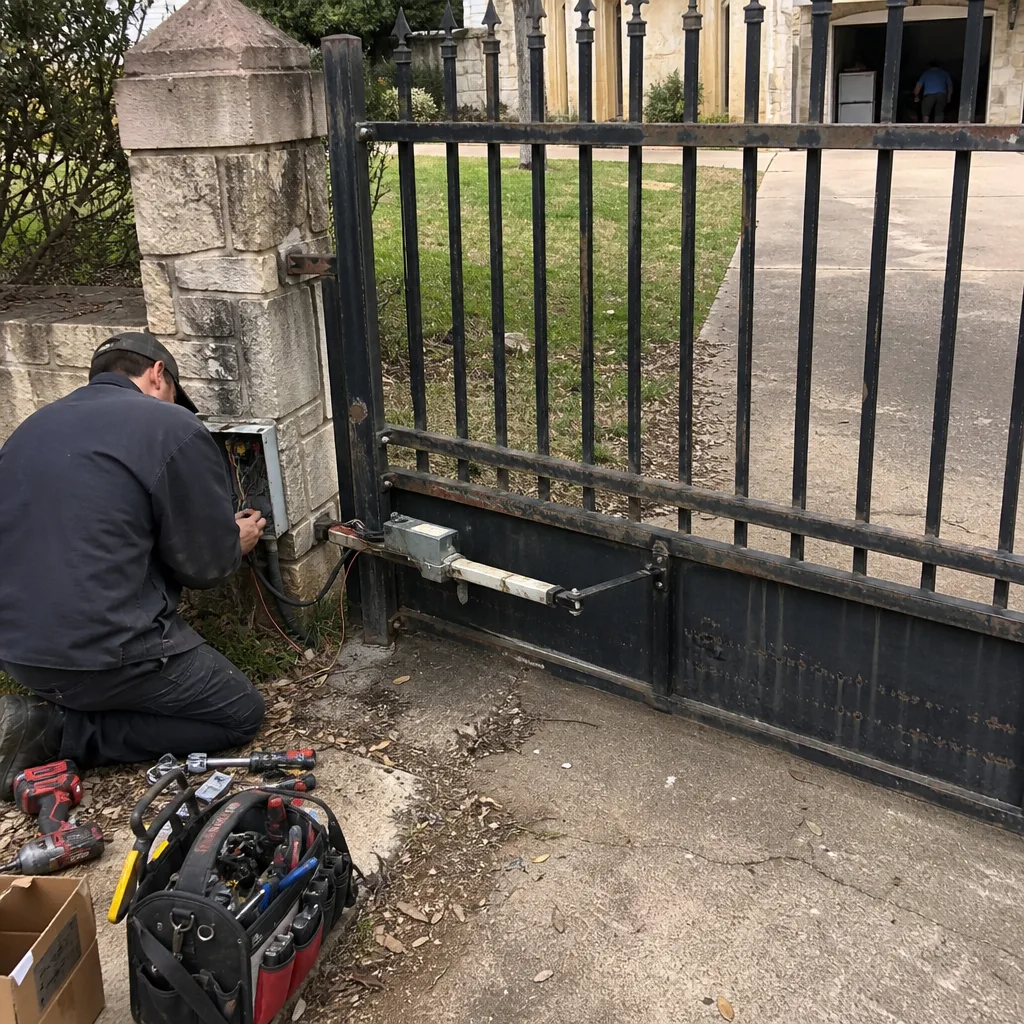 Before
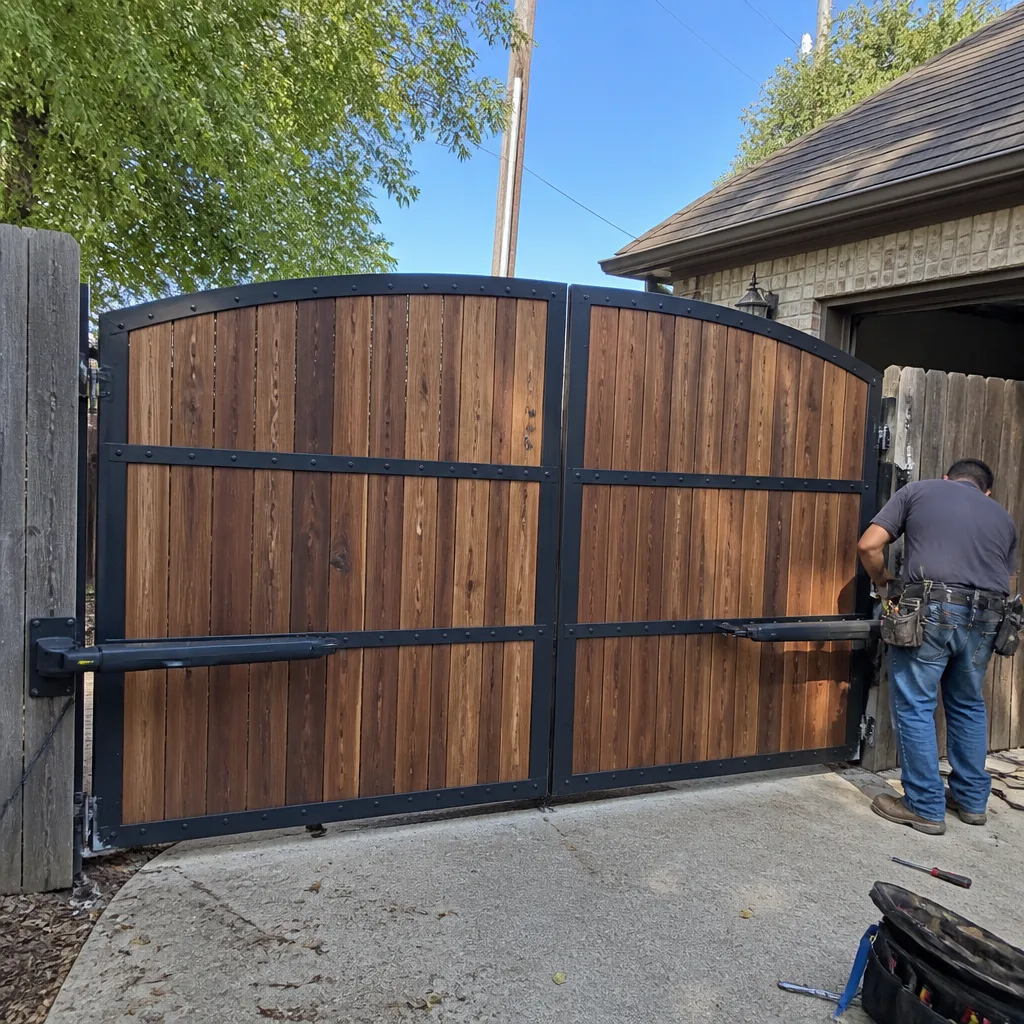 After
Gate Repair Maintenance Checklist for Waxahachie Homeowners
Most gate failures in Waxahachie don’t start with a dramatic snap. They start quietly: a hinge pin wearing down one millimeter at a time, a capacitor drying out over three Texas summers, a chain settling into a loose sag that nobody notices until the gate won’t close on a windy February afternoon. Homeowners who inspect twice a year typically get ten to fifteen extra years out of a gate that would otherwise need major repair. This guide is the same checklist our technicians use when they walk a property in Waxahachie, and it covers what to look at, what to listen for, what to tighten, and when to call someone who does this work every day. By the end, you will know exactly what your gate needs before it tells you the hard way.
Quick Answer
A proper gate maintenance checklist for Waxahachie homeowners includes six checks: hinge and weld inspection, gate level and ground clearance, opener force and limits testing, battery backup health, safety sensor alignment, and track or chain lubrication. Do this twice a year, in spring and fall, and address any finding the same week. Most repairs in Waxahachie run between $180 and $340 when caught early, versus $900 to $2,400 when a worn part fails and takes the opener with it.
Table of Contents
- Hinges and Welds: What to Check First
- Gate Level and Ground Clearance
- Opener Force and Limit Settings
- Battery Backup and Power Health
- Safety Sensors and Photo Eyes
- Chain, Track, and Lubrication
- A Waxahachie Seasonal Maintenance Calendar
- Common Mistakes to Avoid
- When to Call a Professional
- Frequently Asked Questions
- The Bottom Line
Hinges and Welds: What to Check First
Every gate that swings or slides depends on hardware that is under constant load. A single residential gate leaf can weigh 400 to 900 pounds. That weight sits on two or three hinge points, and every time the gate opens, those points flex. In Waxahachie, black clay soil expands and contracts with the rain and drought cycle, which means the gate posts move slightly, which puts lateral stress on the hinges. We have replaced hinges in the Meadow Creek and Saddlebrook neighborhoods that were less than eight years old but had been pulling away from the post for two full seasons before anyone noticed.
Here is the hinge and weld check, in order:
- Visually inspect each weld joint. Look for hairline cracks, rust lines running out of a weld, or paint that has lifted along a seam. A cracked weld on a gate typically starts as a paint line that doesn’t sit flat before you can see the actual break.
- Lift the gate leaf slightly at the latch end. Play of more than a quarter inch at the hinge means the bearing or bushing is wearing. On a slide gate, push up on the gate where it leaves the track. Movement means roller wear.
- Look at the hinge pin itself. If the pin shows a polished ring where the gate rides, the bushing is done and metal is now wearing against metal.
- Check the post bases. Look for soil pulling away from the concrete footer or a post that has shifted out of plumb. In Waxahachie, a post that tilts one degree in June can be three degrees out by September if the soil gets dry.
- Spray the hinge with penetrant. A light coating of fluid film or a dry lubricant at the hinge pin extends the life of the bushing. Do not use grease without cleaning the joint first - Waxahachie limestone dust collects in grease and turns it into a grinding paste.
If you catch a hinge before it fails, the repair is usually a new bushing, a re-weld, or a post re-set. If you miss it, the gate drops, drags the latch and the opener bar, and you are now replacing the entire hinge assembly plus the opener troubleshooting. The Ironworks Gate Co. home page shows what a properly rebuilt hinge looks like on a 40-year-old gate that still closes like it was hung yesterday.
Gate Level and Ground Clearance
A gate that drags is a gate that eats itself. Ground clearance is the single most common issue we see in Waxahachie, and it is also the easiest to prevent. The gate should sit level, with the bottom rail parallel to the driveway. For swing gates, you want at least two inches of clearance at the lowest point of the swing arc. For slide gates, the rollers carry the weight and the gate should never ride on the ground.
Why this matters more in Waxahachie than in Dallas or Fort Worth: our soil is the Ellis County black gumbo. When it rains, it swells. When it dries, it shrinks and cracks open. A concrete driveway next to a gate post will heave slightly over a wet winter and settle back over a dry summer. That movement changes the gate geometry. A gate that cleared by two inches in April might be shaving grass in July.
What to check:
- Open the gate fully and watch the bottom rail. Does the gap change as the gate swings? If it dips in the middle of the arc, the post or the hinge is moving.
- Look at the wear point on the ground. If you see a scrape mark in the concrete or a bare patch in the grass under the arc, the gate has already been dragging.
- Check the latch alignment. A gate that has settled will not latch. The latch bar and receiver should line up within an eighth of an inch without forcing.
- Walk the slide gate track. Look for cracks in the concrete track, rusted bolts on the guide rollers, and debris built up in the U-channel. High winds in spring blow gravel and twigs into the track and they jam the gate open.
Our gate repair services in Waxahachie frequently start with a simple re-level and hinge adjustment. Half an hour of work prevents a year of wear.
Opener Force and Limit Settings
Every gate opener has two adjustable settings that most homeowners never touch: force and limits. Force controls how hard the motor pushes before it stops and reverses. Limits control how far the gate travels in each direction. If either is set wrong, the motor works harder than it should, and the gate is less safe.
In Waxahachie, the most common opener brands we service are Ghost Controls, Mighty Mule, DoorKing, and Elite. Each has its own procedure, but the principles are the same. The gate should close fully and rest against the stop without the motor audibly straining. The opener should reverse immediately if the gate meets resistance from anything heavier than a hand push. The limit switches should be set so the gate stops exactly at the open and closed positions, not three inches short or three inches past.
Here is the basic test, done safely with the opener in manual mode first:
- Put the opener in bypass or release. Manually move the gate through its full travel. It should move with even resistance and no catches or hard spots.
- Re-engage the opener and run a full cycle. Stand to the side, never in the path of the gate. Watch the gate at both ends of travel.
- Listen for the motor pitch change. A smooth “hmm” through travel changing to a strained “err” at the end means the limit is set past the mechanical stop or the gate is binding.
- Test the reverse. With the gate closing, place a 2×4 or similar object in the path. The gate should stop and reverse before crushing it. If it does not, the force setting is too high and needs adjustment before the gate can be considered safe.
- Check the auto-close timing. If the gate closes faster than expected after a vehicle passes, or if it sits open for minutes, the timer is set wrong. You should have time to pull in, stop, and clear the gate without rushing.
Force and limit settings drift over time as the gate hardware settles. A gate that passed the force test in spring may fail it in fall after the soil shifted. If you are not comfortable adjusting these settings, leave them alone. The force setting exists to prevent injury, and an incorrectly high force setting is a safety problem, not just a mechanical one.
We train our technicians on nine opener brands, including Ghost Controls, Mighty Mule, DoorKing, Elite, LiftMaster, FAAC, BFT, Linear, and Viking. When we adjust force and limits on any of them, the gate is tested three full cycles and the settings are written on the service ticket so you and we both have a record. Details on our gate opener repair page.
Battery Backup and Power Health
A gate opener with a dead backup battery is not actually protected. Texas weather in Ellis County includes spring thunderstorm season, an occasional ice event that takes out lines for a day or more, and summer brownouts during peak demand. If your opener has a battery backup, and many modern Ghost Controls and DoorKing units do, that battery needs attention twice a year.
Batteries wear out, and heat kills them faster. A battery in a metal enclosure on a Waxahachie driveway in August is sitting through 120-degree days inside that box. Three years is a good run for most sealed lead-acid backup batteries in our climate. Five years is exceptional. When the battery fails, the gate simply will not open during an outage, which means you are either walking the gate open manually or climbing over it, which no 70-year-old homeowner should have to do.
The check:
- Note the battery’s install date. If there is a date written on it and it is older than three years, plan to replace it before storm season.
- Test the system once a season. Turn off the breaker that feeds the opener, or unplug the opener at its power point, and run the gate. If it opens once and then barely moves or makes a slow whine, the battery is near the end.
- Look for swelling or corrosion. A bulging battery case or white crust around the terminals means the battery needs to come out now, safely.
- Check the solar panel if your gate is solar-powered. Wipe the panel face clean, check the brackets, and make sure the panel is angled for afternoon sun, not shaded by a new tree.
- Confirm both eyes have power. Most photo eyes have a small LED that tells you they are receiving power and aligned. One solid light, one blinking light means misalignment. No light at all means the wire or the board is dead.
- Wipe the lenses with a dry cloth. Waxahachie dust and pollen build a film in one spring week. A clean lens can fix a phantom misalignment.
- Make sure the eyes are at the same height and pointing at each other. A wand hit by a mower can twist a sensor bracket two degrees, and two degrees is enough.
- Check the wiring at the base for exposed copper. Weed trimmer damage and rodent damage both happen in this area. If you can see copper, the wire needs to be repaired or replaced by someone who knows low-voltage wiring.
- Test with the opener by blocking the beam during a close cycle. The gate should stop and reverse. If it does not, treat the gate as defective until it is fixed.
- Full hinge and weld inspection. The freeze-thaw cycle of a February ice event is when cracked welds show themselves.
- Battery backup test. Storm season is six weeks away. A dead battery discovered now is a five-minute fix compared to a locked-shut gate during a power outage in April.
- Clean the photo eyes and check the bracket bolts.
- Check the gate post plumb. Winter soil heave can tilt a post enough to bind the gate, and most of it shows up in March.
- Lubricate the hinges, latch, and opener pivot points with a dry lubricant.
- Inspect the opener enclosure for dust intrusion. Our dry spring means the enclosure’s cooling vents plug with fine soil from drought conditions. A plugged enclosure that overheated in June is a common reason a garage-side keypad stops working.
- Test the auto-close setting. Spring growth has not yet shaded anything, but the heat has started, and capacitors and batteries fail early in the first heat wave, not the last one.
- Check the ground clearance. The transition from spring rain to summer dry is when clay soil does its biggest single shift in Waxahachie, and this usually happens between April and June.
- Second full hinge and weld inspection. Do not wait until after the first freeze.
- Run a full opener cycle test, including force and limit confirmation. Mark it on a sticker on the interior of the opener enclosure if you do the work yourself.
- Clean the gate track thoroughly. Falling leaves and pecans in older Waxahachie neighborhoods like the historic district will jam a wheel in November.
- Check the battery backup again. The winter ice risk here is real, and it happens when the grid is already stressed.
- Using WD-40 on chains and hinges. WD-40 is a solvent with a light lubricant in it. It cleans but does not lubricate for more than a few days, and in Waxahachie dust it leaves a film that attracts grit. Use a dry lube made for the purpose.
- Ignoring a slowing gate. A gate that takes longer to open this summer than it did last spring is telling you something. It is usually the capacitor in the opener motor, a weakening battery, or a binding hinge. All three are cheaper to fix before failure than after.
- Tightening a sagging chain without checking the sprocket. A new chain on a worn sprocket fails faster than the old chain did. Replace them together.
- Painting hinges and moving parts. Paint on a hinge pin gets into the bearing surface, binds the joint, and flakes off into a grit that accelerates wear. If you are painting your gate, mask the hardware or remove it first.
- Force-closing a gate that reverses. If the gate reverses when the photo eyes register something, something is in the path or the sensors are misaligned. Bypassing the sensor is not a fix. It is how entrapment injuries happen on residential driveways in Ellis County, and it violates the gate’s UL listing.
- Skipping the February inspection. The single worst month for unplanned gate repairs in Waxahachie is March, because February’s temperature swings crack the welds and loosen the bolts that January’s cold snap set up. A February inspection costs less than a March emergency call.
- Replacing a gate opener before checking the gate itself. If the gate is dragging or the hinges are worn, a new opener will work hard, overheat, and fail early. The gate and the opener have to match, and the gate has to roll or swing freely first.
A common Waxahachie scenario: the power flickers during a storm, the opener loses its programming, and the gate opens halfway and stays there. A healthy backup battery prevents this and holds the opener’s settings through the outage. If you have a Ghost Controls or Mighty Mule system and you do not know whether you have battery backup, our gate installation team in Waxahachie can inspect it and note it on your service record.
Safety Sensors and Photo Eyes
Safety sensors are the non-negotiable part of gate maintenance. Since 2000, every automated gate manufactured for residential use in the United States has been required to include entrapment protection. That means photo eyes across the gate opening, an edge sensor on the closing edge of the gate, or both. In Waxahachie, where many homes are on an acre or more and gates open directly onto both horse property and residential courts, the sensors do real work every single day.
Photo eyes get dirty, misaligned, sun-blinded, and occasionally broken by kids on bikes or a bouncing basketball. When a photo eye is not working, most modern openers default to a fault state: the gate will not close automatically, or it reverses immediately after starting to close. Homeowners often respond by holding the manual override, which defeats the safety system. We see this regularly on a troubleshooting call in Waxahachie, and it is the wrong fix.
What to check:
Do not bypass a safety sensor. The purpose is not convenience; it is the difference between a gate and a 700-pound moving wall.
Chain, Track, and Lubrication
Lubrication is the most neglected maintenance task on any gate. It is also the easiest one to do wrong. The right lubricant in the right place extends the life of a chain, a gear, and a track by years. The wrong lubricant pulls in Ellis County grit and turns it into sandpaper.
For slide gates, the track is the part that takes the most abuse. A wax-based dry lube is what we use and recommend. It lubricates without staying wet, and it does not attract dirt the way oil or spray grease does. Apply it to the rollers, not the track itself. The gate rides on the rollers; the track is just the straight edge that keeps the wheels true.
For swing gates with arm-type openers, the pivot points at both ends of the opener arm should get a drop of light machine oil or a spray of dry lubricant every season. The hinge pins should get the same. The gate latch and receiver benefit from a dry lube, not a wet grease.
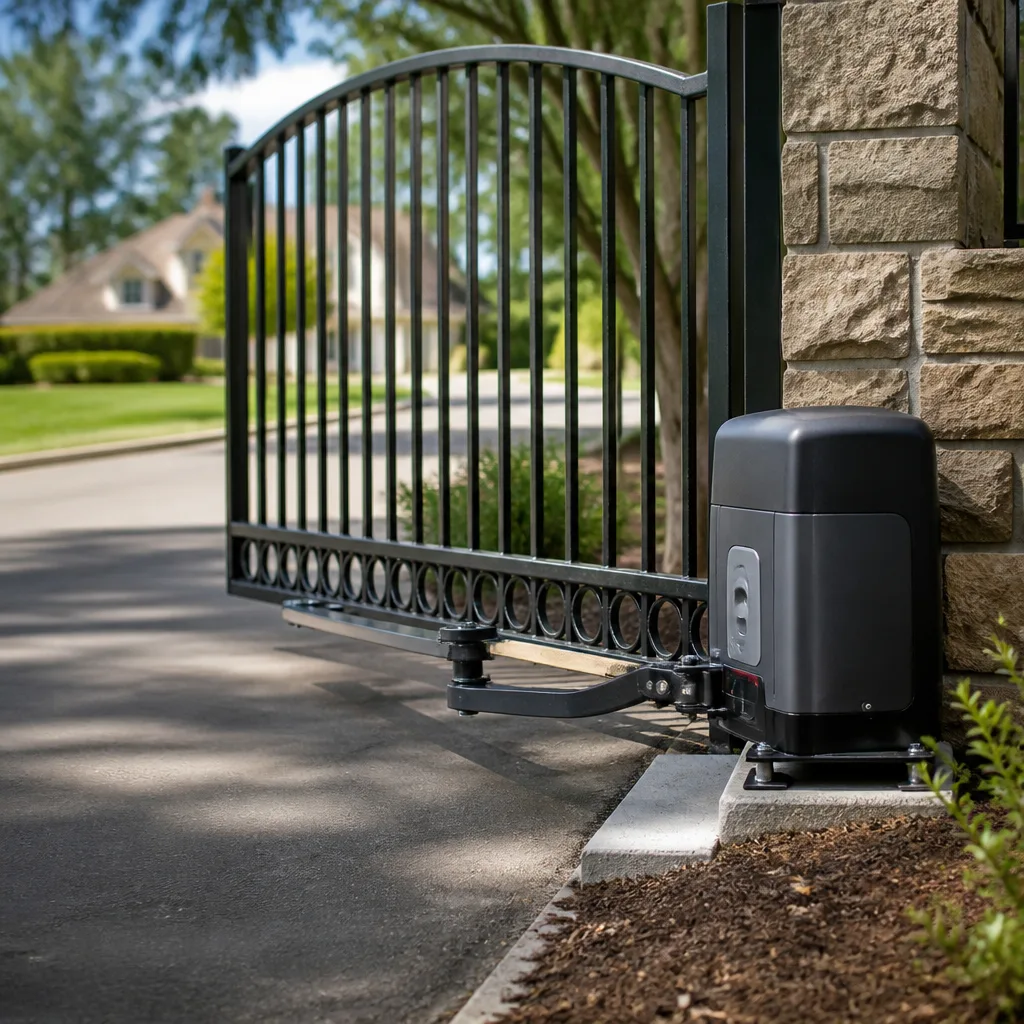
For chain-driven slide gate openers, check the chain tension. A properly tensioned chain has about a half-inch of deflection at the midpoint when pressed with a thumb. A sagging chain is either stretched and done for, or the chain-tensioning bolt has backed off. A too-tight chain loads the drive gear and the motor bearings, and the motor runs hot. A chain that has been stretched for a year on a Mighty Mule or an Elite opener will usually also need the sprocket checked, because a stretched chain and a worn sprocket wear each other out together.
Our rule from 42 years of doing this work: if a part moves and you can see it move, it needs lubrication on a schedule. If you are not sure what to use on a particular opener brand, the manual is specific, and following it keeps the warranty intact. We cover the lubrication needs of Ghost Controls, DoorKing, Elite, Mighty Mule, and the other five brands we service on the same visit.
A Waxahachie Seasonal Maintenance Calendar
Waxahachie weather is not the same as North Texas weather in general. We get the Hill Country heat, the Blackland Prairie wind, and the occasional ice storm that glazes everything in a quarter-inch of frozen rain. The right schedule accounts for all of it.
Late February / Early March (Pre-Spring)
Late May (Before Summer Heat)
Mid-October (Pre-Winter)
If you do only two inspections per year, make them the late-February and mid-October ones. Those are the two moments in Waxahachie when a small issue will become a big one within thirty days if left alone.
Our $89 Seasonal Tune-Up covers the full list above, with the exceptions noted on your estimate before any work begins. For homeowners who do their own inspection and find something they do not want to touch, we offer a free estimate on any repair we recommend in Waxahachie.
Common Mistakes to Avoid
When to Call a Professional
Some things on this checklist are safe for any homeowner who owns a ladder, a socket set, and a can of dry lubricant. Some things are not. Call a professional if you find a cracked weld, a post that has visibly shifted, an opener force setting that fails the reverse test, a gate that has jumped its track, or any electrical issue inside the opener enclosure. These are not do-it-yourself projects, and several of them involve stored energy that can injure a person who does not know how to release it safely.
If you are in Waxahachie and you find any of the above, we will come look at it. Ironworks Gate Co. offers free estimates on repairs, and we honor a free second opinion on any written estimate from another company. A quote is given up front, always, before any work begins, and it does not change without your approval. Call (936) 226-3481 and a live person answers, day or night.
Frequently Asked Questions
Twice a year, once in late February and once in mid-October. These two points bracket the freeze-thaw cycle in late winter and the summer soil shift, both of which are the leading causes of gate failure in Waxahachie. An $89 seasonal tune-up from Ironworks Gate Co. covers the full checklist.
Minor repairs like hinge bushing replacement, sensor realignment, and force-setting adjustments typically run $180 to $340. Larger repairs like full hinge replacement, chain and sprocket replacement, or a new opener board run $900 to $2,400. Every estimate is provided in writing before work starts, and the price does not change without your approval. Call (936) 226-3481 for an exact quote on your gate, free.
Yes. A live person answers the phone 24 hours a day, 7 days a week, and we schedule gate repair calls in Waxahachie seven days a week. Most repairs are completed in a single visit, and the price is agreed before we turn a bolt.
We are trained and equipped on nine gate-automation brands: LiftMaster, FAAC, BFT, Linear, Viking, Ghost Controls, DoorKing, Elite, and Mighty Mule. Whatever opener is on your Waxahachie driveway, the correct fix is made on the first visit.
Yes. We specialize exclusively in driveway and estate gates, which keeps us from being a generalist. That includes gate repair, full gate installation, opener and motor work, access control and keypads, and gate welding and parts. It is all we do.
Yes. A worn hinge changes the entire geometry of the gate, puts lateral load on the opener, and wears the latch, the post, and the motor all at once. In Waxahachie’s shrink-swell clay soil, a hinge that was tolerable in April can be the reason the gate will not close by July. Fixing the hinge early is almost always a $200-to-$300 job; ignoring it is how a $1,500 repair starts. The gate repair page shows what we find on warranty calls versus on emergency calls.
The Bottom Line
Your gate is a machine with moving parts and a motor, sitting outside in Texas weather, carrying hundreds of pounds of weight every cycle. It needs a twice-yearly look at the same six points: hinges, level, opener settings, battery, sensors, and lubrication. If you do that in Waxahachie, the gate will last longer, fail less, and cost you less. If you do not, it will fail in a way that costs more than it should, usually at the worst time. We have been fixing and building gates in this area from the Ironworks Gate Co. home shop for over 42 years, and we stand behind every job with a written 90-Day Done Right Promise. Call (936) 226-3481 for a free estimate, and we will be there when we say.
Written by Victor Salinas, Owner at Ironworks Gate Co., serving Waxahachie since 2013.