
Last updated August 25, 2026
Free on-site gate assessment - hinges, posts, and your LiftMaster or Nice gate operator checked before anything is quoted
The assessment is free and the quote is the invoice.
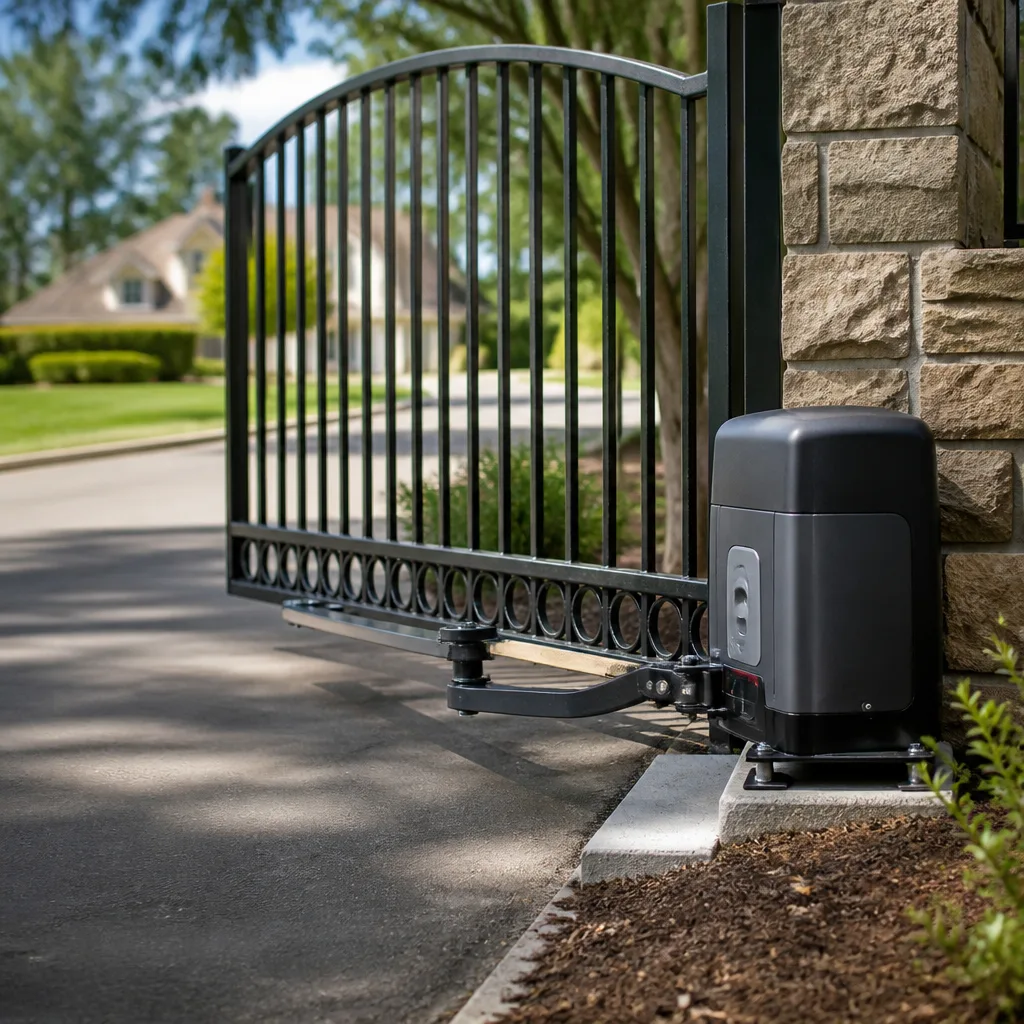
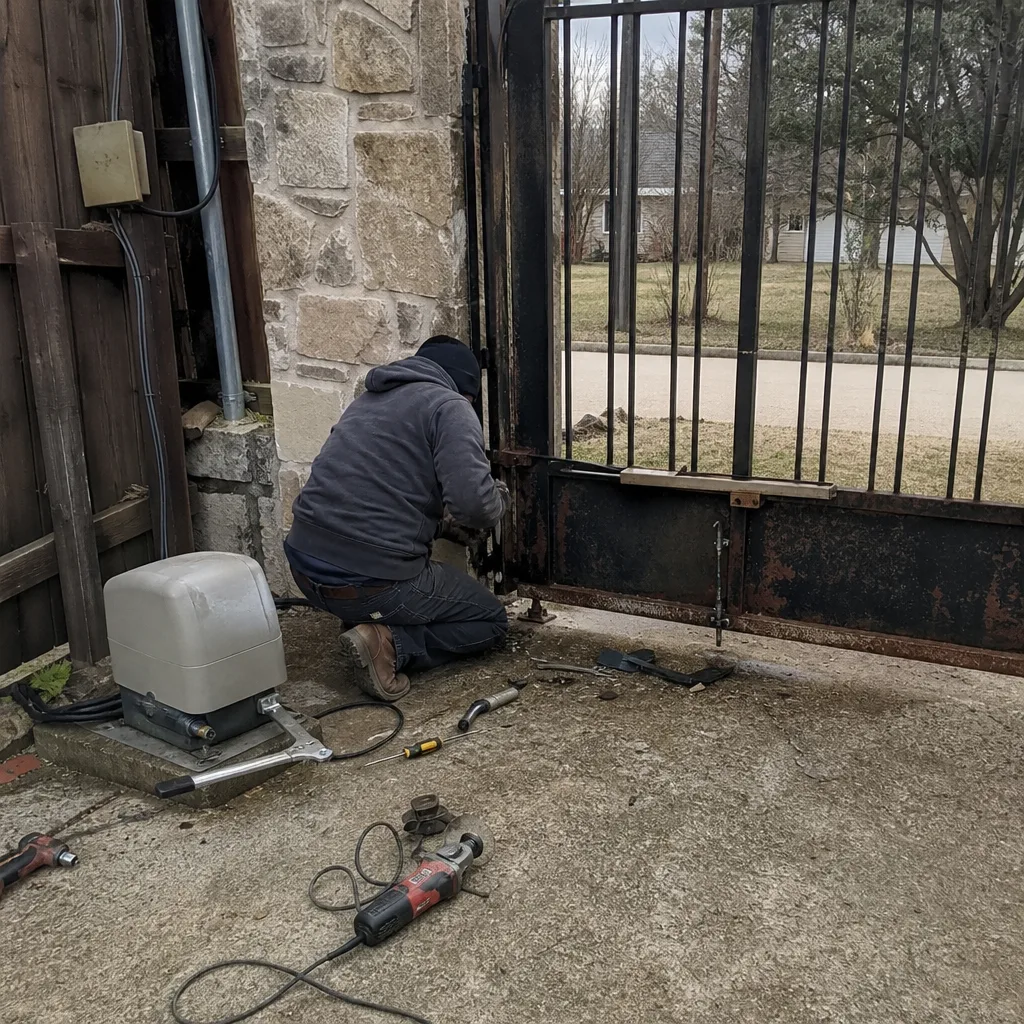 Before
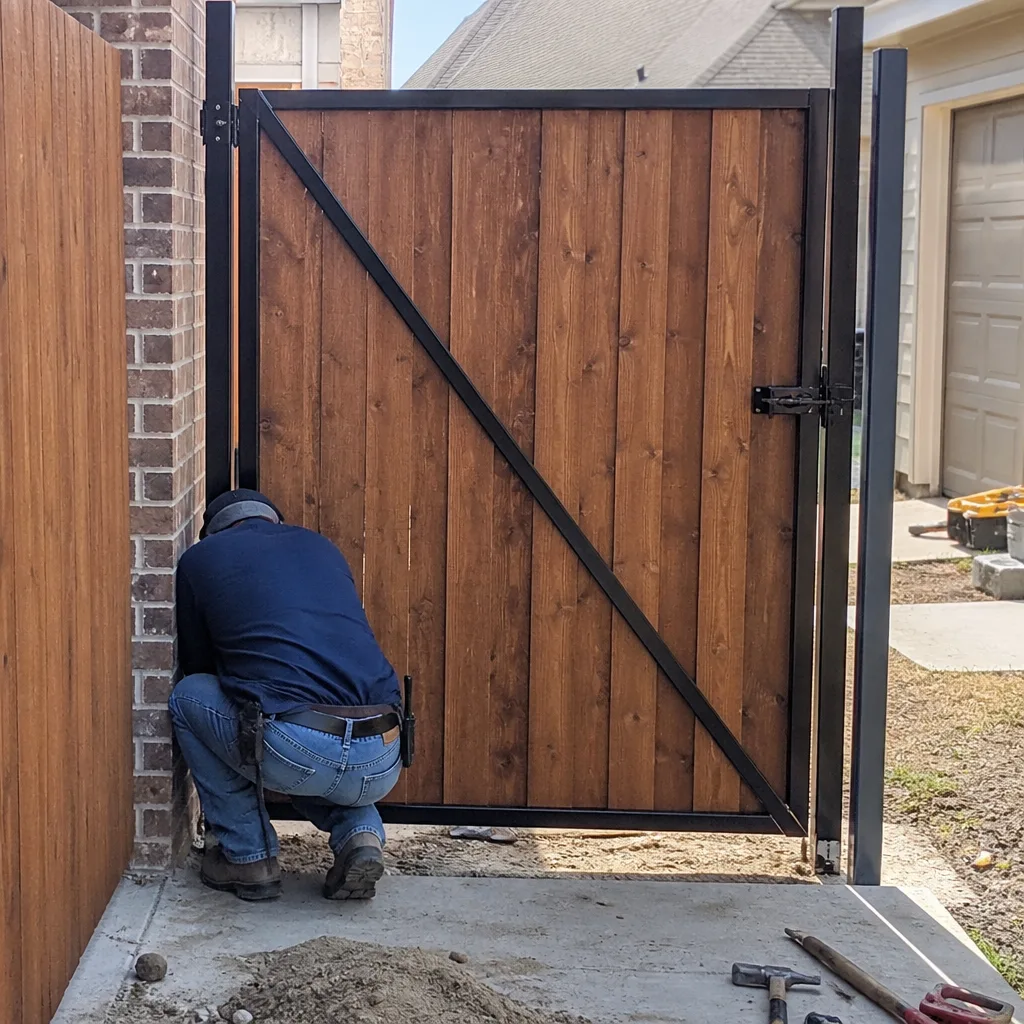 After
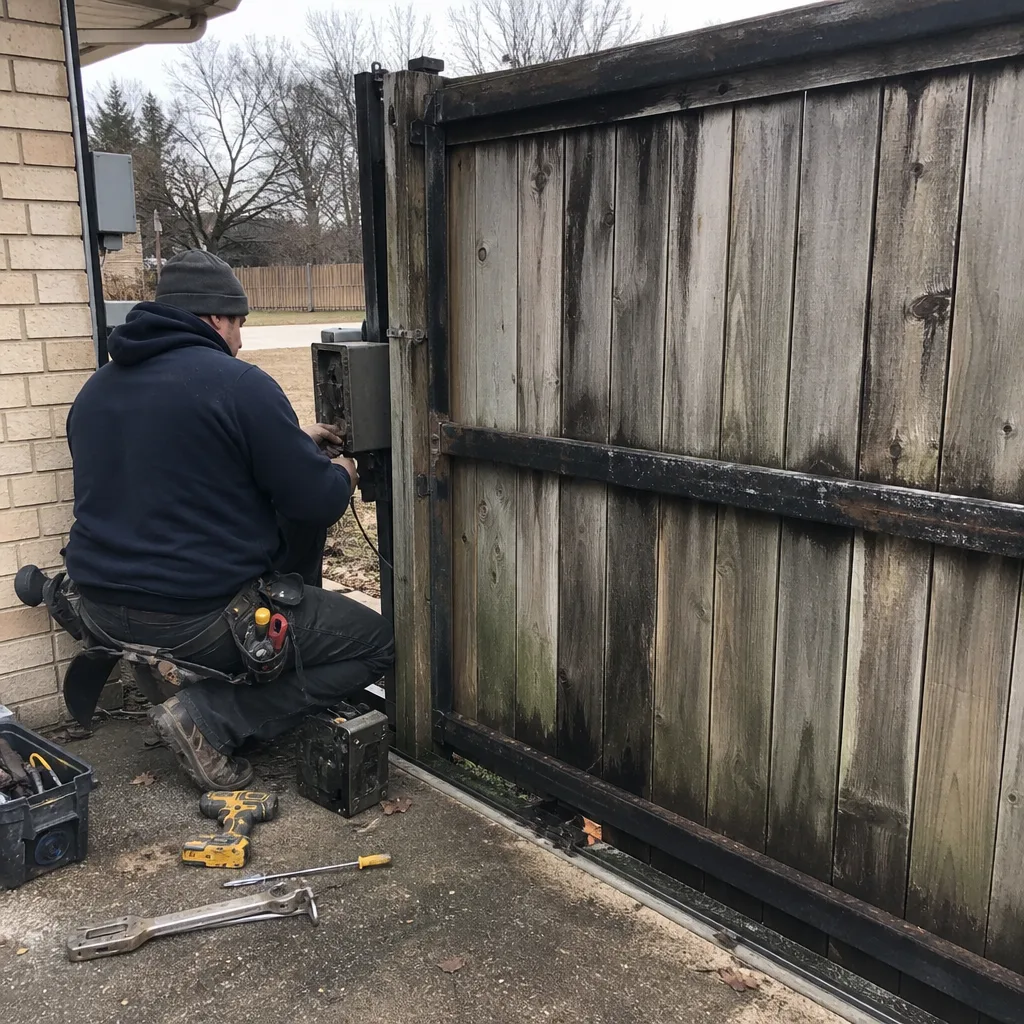 Before
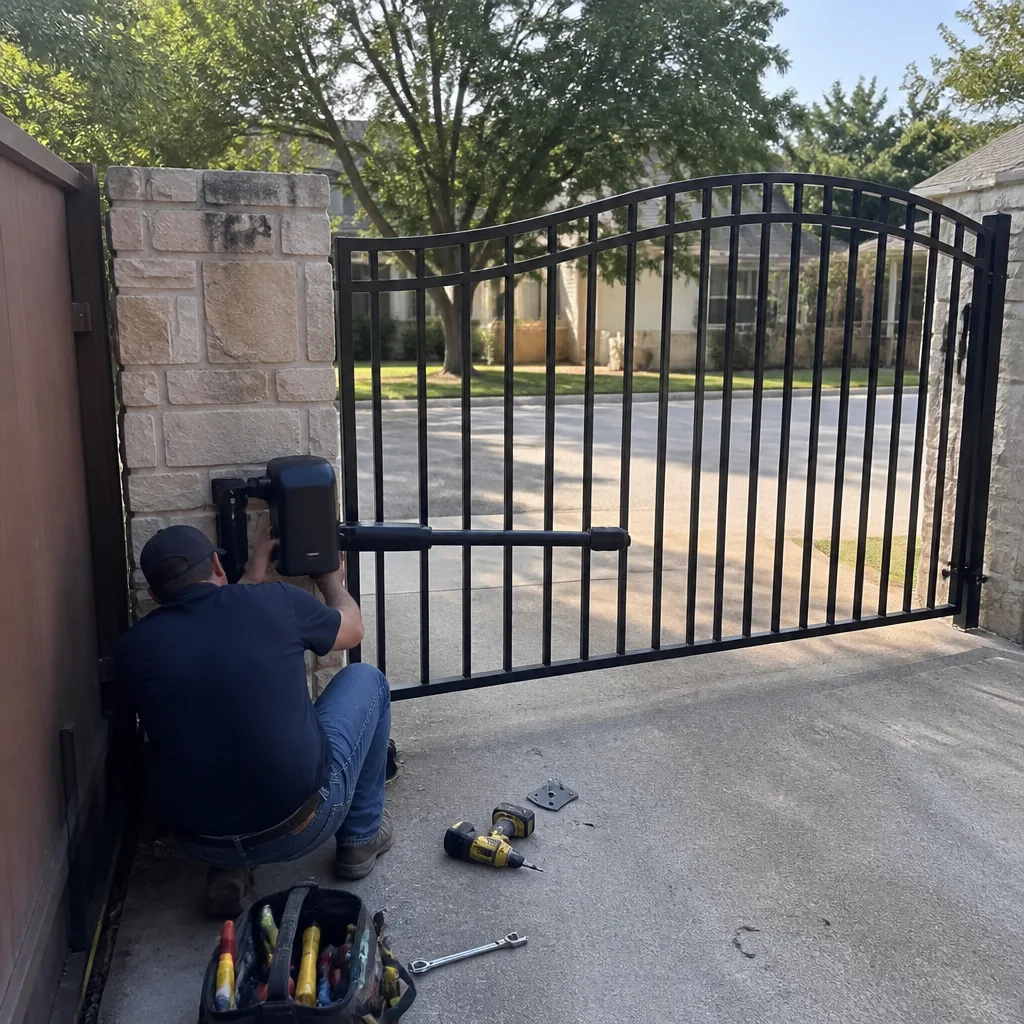 After
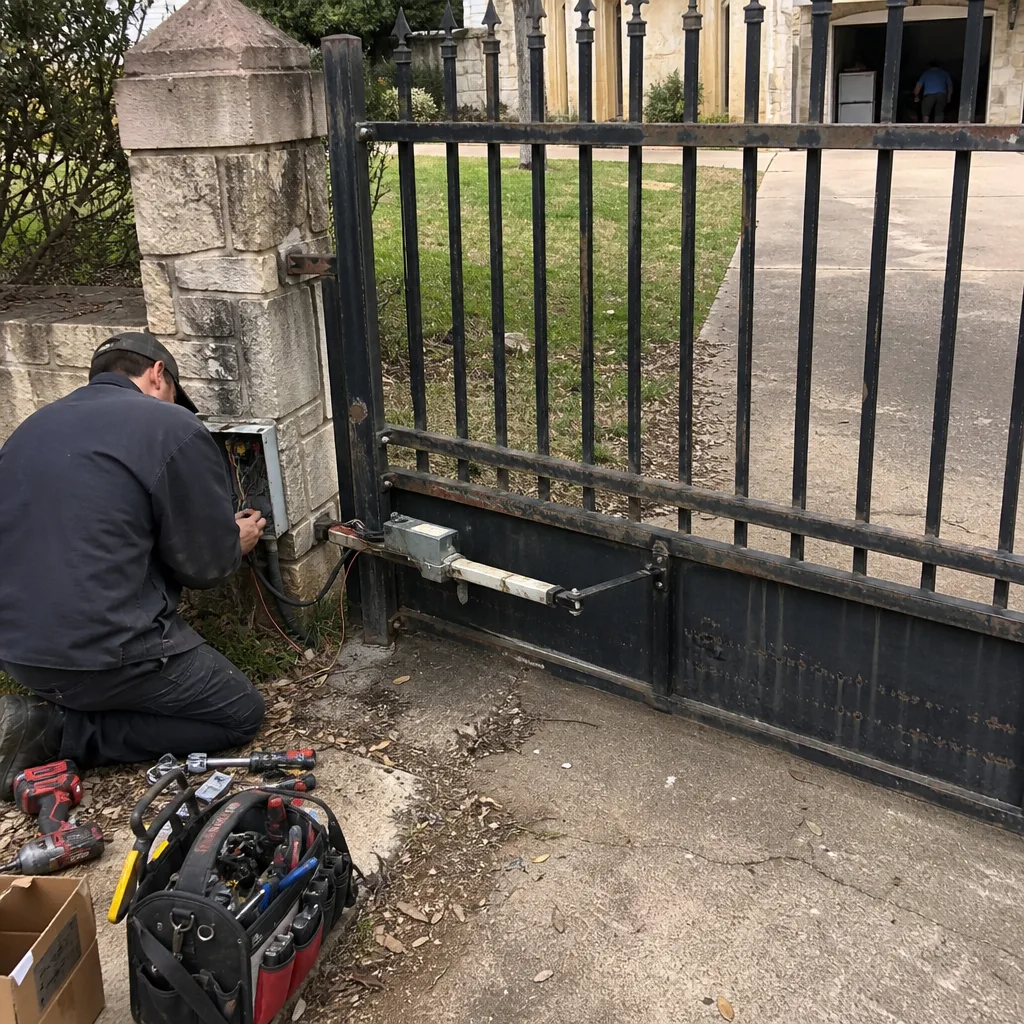 Before
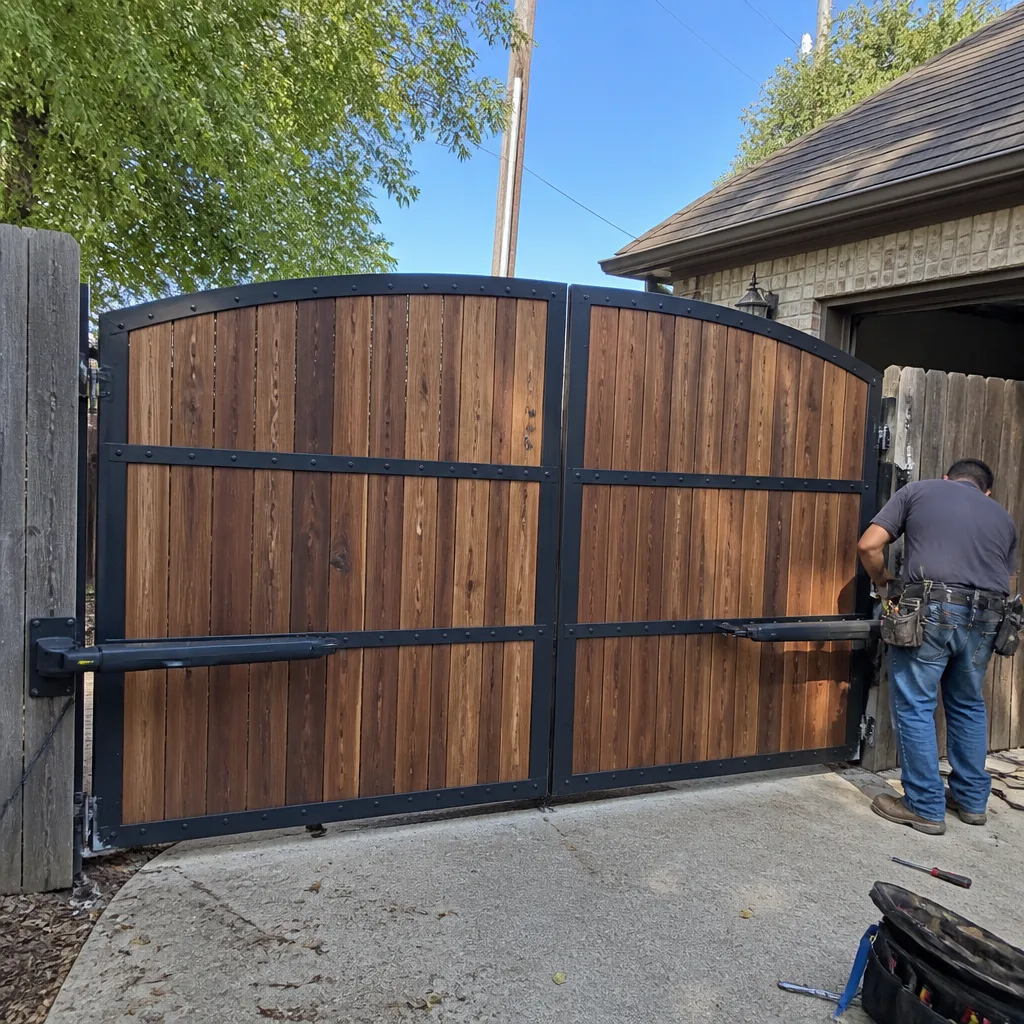 After
Gate Repair Permits, Codes & Inspections in TX: What You Need to Know
Most Texas homeowners assume a driveway gate is just a big piece of metal on hinges, and fixing it means calling whoever shows up first. Then the invoice arrives, or the county inspector knocks, and the real lesson lands: Texas regulates gates more than almost any residential feature except a septic system. In Waxahachie, where wind loads, limestone soil, and Ellis County’s permitting habits all collide, the rules can surprise even long-time residents. This guide lays out the actual permit triggers, the code sections that matter, the inspection sequence, and the mistakes that cost homeowners the most. By the end, you’ll know exactly what your gate project requires before anyone touches a welder.
Quick Answer
In Texas, gate repair usually does not require a permit when you’re replacing like-for-like parts: hinges, wheels, sensors, opener motors, or panels. A permit is generally required when the gate is new construction, the posts or footings are being moved or replaced, the gate is over 6 feet tall, or the project is in a floodplain or historic district. Always confirm with Ellis County or the City of Waxahachie before starting, because the difference between “repair” and “alteration” is narrower than most people think.
Table of Contents
- Do You Need a Permit for Gate Repair in Texas?
- When a Permit Is Required in Waxahachie and Ellis County
- Texas Codes That Govern Residential Gates
- HOA Rules and Deed Restrictions: The Second Layer
- Inspections: What Happens and What Inspectors Look For
- Gate Automation Safety Requirements: UL 325 and ASTM F2200
- Permit Costs and Timelines in Waxahachie
- Common Mistakes to Avoid
- When to Call a Professional
- Frequently Asked Questions
- The Bottom Line
Do You Need a Permit for Gate Repair in Texas?
Here’s the rule of thumb we give every Waxahachie homeowner who calls us: if the repair keeps the gate exactly where it was, with the same posts in the same holes and the same footprint, you’re almost always in the clear. Replacing a bent hinge, swapping a failed Ghost Controls opener arm, welding a cracked frame, or putting new wheels on a sliding gate is maintenance. Texas building codes treat maintenance and like-for-like replacement as exempt from permitting in most municipalities.
The confusion starts when “repair” drifts into “reconstruction.” If a post is leaning and we have to pull it, dig a new footing, and pour concrete, that’s an alteration. If you’re widening the gate opening, adding height, or converting a swing gate to a slide gate, that’s new work. In those cases, the City of Waxahachie and Ellis County both want paperwork.
Specific triggers in Waxahachie include:
- Replacing or relocating any post or footing
- Changing the gate’s overall height or width by more than 6 inches
- Installing a new gate where none existed before
- Adding a pedestrian gate beside an existing driveway gate when the driveway gate stays
- Moving the gate location along the driveway
- Any work in a designated floodplain, which includes sections of Waxahachie near the creek system
If you’re unsure, call the building department. A five-minute phone call beats a stop-work order. We’ve had customers in the North Grove and Willow Ridge areas get surprised by inspector drive-bys on projects they thought were “just a repair.”
When a Permit Is Required in Waxahachie and Ellis County
Waxahachie operates its own building inspection department, separate from Ellis County’s, and the two don’t always move at the same speed. If you live inside city limits, you deal with the City of Waxahachie. If you’re outside city limits in unincorporated Ellis County, the county handles it. The requirements are similar, but the application process and fees differ slightly.
Here’s a step-by-step of what a typical permitted gate project looks like in Waxahachie:
- Confirm jurisdiction. Check your address. City limits map is on the Waxahachie website, or call the building department and ask directly.
- Gather documents. You’ll need a site plan showing the gate location, setbacks from property lines and the road, and the gate’s dimensions. If you’re in a subdivision with an HOA, bring your approval letter.
- Submit the application. The City of Waxahachie accepts permit applications in person at the building department. Ellis County accepts applications at the county courthouse annex.
- Pay the fee. Gate permits in Waxahachie typically run between $50 and $150 depending on project value. Ellis County’s fee structure is similar, often calculated as a percentage of the project value with a minimum of $35 and a maximum around $300 for residential accessory structures.
- Wait for review. Most residential gate permits in Waxahachie clear review in 5 to 10 business days. Ellis County can take up to two weeks during busy season in the spring.
- Schedule inspections. You’ll need a footing inspection before concrete is poured for new posts, and a final inspection once the gate is hung and the operator is installed if automation is part of the permit.
One local quirk worth knowing: Waxahachie requires setback compliance for any gate that opens toward a public right-of-way. If your gate swings out over the sidewalk or into the street easement, that’s a problem. Most driveway gates in Waxahachie are designed to swing inward or slide parallel to the fence line for exactly this reason.
Texas Codes That Govern Residential Gates
Texas doesn’t have a single “gate code.” Instead, gates fall under a stack of codes that apply depending on what the gate is, where it sits, and what’s attached to it. The two that matter most for residential driveway gates are ASTM F2200 and the International Residential Code as adopted by Texas.
ASTM F2200 is the big one for automated gates. It sets the standard for gate construction, entrapment protection, and signage. Any automated gate installed in Texas should meet ASTM F2200, and most municipalities write that requirement into their local ordinances. The standard covers things like:
- Maximum gap between gate and post to prevent entrapment of hands or feet
- Required safety devices: photo eyes, contact edges, or both depending on the gate type
- Warning signage requirements for automated gates
- Wind load ratings, which matter in Ellis County where spring storms and straight-line winds are common
- Gate speed and force limits for the operator
The International Residential Code (IRC) governs the structural side. In Waxahachie, chapters relevant to gates include:
- IRC Section R301: Design loads. Gates must withstand the wind load for the region. North Texas sits in a 90 mph wind zone, and a 6-foot-tall solid gate catches a lot of wind. That’s why we see so many bent and twisted gates in Waxahachie after storm season.
- IRC Section R311: Means of egress. A gate must not block a required exit from the home. If your gate is the only access to the backyard, it needs to function as a door, not a decorative wall.
- IRC Section R325: Swimming pool barriers. If you have a pool, your gate is part of the pool barrier and must meet height, latch, and self-closing requirements. This catches a lot of Waxahachie homeowners off guard. A gate that’s fine for security may not meet pool barrier code, and the inspector will flag it.
Ellis County follows the same IRC chapters but has been slower to adopt newer editions. Always confirm which code year your jurisdiction uses. It changes what’s grandfathered and what’s not.
HOA Rules and Deed Restrictions: The Second Layer
Waxahachie has dozens of subdivisions with active HOAs, and their rules often go beyond city code. If you live in a neighborhood with covenants, you have two masters: the building inspector and the HOA architectural committee. We’ve seen a gate pass city inspection and get rejected by the HOA the same week.
Common HOA restrictions in Waxahachie-area subdivisions include:
- Maximum gate height, usually 6 feet, sometimes 5 feet in front yards
- Allowed materials: some HOAs prohibit chain-link or aluminum, requiring wrought iron or steel
- Color requirements: black, bronze, or a specific paint code
- Style requirements: “ornamental” vs. “solid panel” design rules
- Automation approval: some HOAs require documentation that the operator meets safety standards before allowing installation
- Setback rules stricter than city code, often 10 feet or more from the curb
The order matters. We tell every Waxahachie customer with an HOA to get written architectural approval first, then pull the city permit. Skipping the HOA step means you might pour a footing, pass the city inspection, and then have the HOA demand changes. A written approval from the architectural committee also protects you if the HOA board changes its mind later.
Inspections: What Happens and What Inspectors Look For
If your gate project requires a permit, it also requires at least one inspection, and usually two. The inspection sequence in Waxahachie goes like this:
- Footing inspection: After the holes are dug but before concrete is poured. The inspector checks depth, width, and placement. In Waxahachie’s blackland prairie soil, which expands and contracts dramatically with moisture, footings need to go deep enough to avoid heave. Most inspectors want to see at least 30 inches of depth for gate posts, and more for heavy automated gates.
- Final inspection: After the gate is hung, the operator is installed if applicable, and all safety devices are in place. The inspector checks gate clearance, swing direction, safety edges and photo eyes, operator force settings, and signage if the gate is automated.
What inspectors in our area tend to flag most:
- Gate swinging over a public sidewalk or into the street easement
- Missing or non-functional photo eyes on an automated gate
- A gate that can pinch or trap a hand at the hinge post
- Pool barrier violations: a gate that doesn’t self-close or self-latch from any position
- Footings that were backfilled before inspection
- Operators with no manual release accessible from outside the gate
The inspection itself is usually quick, 15 to 30 minutes. But if it fails, you’ll need to schedule a re-inspection, which in Waxahachie can take another 5 to 10 business days. Fixing small problems before the inspector arrives saves everyone a week.
Gate Automation Safety Requirements: UL 325 and ASTM F2200
Automated gates are the most code-sensitive part of gate work in Texas, and for good reason. A poorly installed gate operator can crush a person or a pet. The regulations are written in blood, which is why UL 325 and ASTM F2200 exist.
UL 325 is the safety standard for gate operators. It requires that every automated gate have at least two independent entrapment protection devices. In practice, that means:
- Photo eyes at the leading edge of a slide gate, or at the pinch points of a swing gate, that stop and reverse the gate when the beam is broken
- Contact edges or pressure sensors that reverse the gate when it hits something
- Inherent obstruction sensing built into the operator, which detects resistance and reverses
If your gate operator is a DoorKing, an Elite, a Mighty Mule, or another brand, the safety requirements don’t change with the brand. What changes is how the safety devices connect. Some operators have built-in obstruction sensing; some require external photo eyes and edges.
Entrapment zones are the specific danger points:
- The gap between a swing gate and the hinge post, which can shear fingers
- The gap between the gate and the latch post as it closes
- The opening where a slide gate passes the stationary panel
- The area beneath a vertical pivot or overhead gate
Every one of those zones needs protection. In our experience, the most common code failure we see in Waxahachie is a swing gate with photo eyes but no contact edges on the hinge side. The photo eyes protect the opening, but the hinge-post pinch point is still exposed. An inspector who knows gates will catch that immediately.
Warning signage is also required for automated gates. ASTM F2200 specifies two warning signs:
- A sign on the gate visible from the street stating that the gate is automatic and children must be supervised
- A sign near the operator warning against reaching through the gate to operate the controls
Both signs are available from gate supply houses, and they’re cheap insurance against a failed inspection.
Permit Costs and Timelines in Waxahachie
Gate permit fees in Waxahachie are modest compared to bigger projects, but they add up when you’re already paying for materials and labor. Here’s what we tell customers to budget:
| Item | Typical Cost | Notes |
|---|---|---|
| Waxahachie building permit (gate only) | $50 – $150 | Based on project value |
| Ellis County permit (unincorporated areas) | $35 – $300 | Percentage of project value |
| Footing inspection | Often included in permit fee | Some jurisdictions charge $35 – $75 separately |
| Final inspection | Often included in permit fee | Confirm at application |
| HOA architectural review | $0 – $100 | Varies by HOA; some charge a review fee |
| Re-inspection (if first fails) | $35 – $75 | Avoidable with proper preparation |
Timeline in Waxahachie, from permit application to approved final inspection, is typically 2 to 4 weeks for a straightforward gate project. That includes the review period, scheduling inspections, and the inspections themselves. If the project involves automation and the inspector wants to verify UL 325 compliance documentation, add a few days.
One practical note: don’t schedule the concrete pour for the same day you apply for the permit. We’ve seen homeowners schedule a concrete truck, apply for the permit that morning, and then learn the review takes a week. The concrete truck shows up anyway, the footing gets poured unpermitted, and the whole project gets flagged. That’s a $500 mistake on a $200 permit.
Common Mistakes to Avoid
- Assuming “repair” covers everything. Replacing a post or widening an opening is not a repair. If the footprint changes, the permit conversation changes. Call the City of Waxahachie and ask specifically.
- Skipping the HOA approval because it’s “just a gate.” In Waxahachie subdivisions with active covenants, the HOA can force removal of an unapproved gate even if the city approved it. Written HOA approval first, city permit second.
- Buying the cheapest gate operator and installing it without photo eyes or contact edges. A $400 Mighty Mule with no safety devices will fail inspection and, more importantly, is genuinely dangerous. The operator must have two independent entrapment protections. Period.
- Pouring the footing before the inspector sees the hole. Once concrete is in, the inspector can’t verify depth. You’ll either need to expose the footing or tear it out. Wait for the green light.
- Ignoring wind load in gate panel design. North Texas storms hit Waxahachie hard. A tall, solid gate panel with an underpowered operator will twist, bind, and eventually fail. Design for the 90 mph wind zone.
- Putting a gate that swings out over the sidewalk. This is a straight setback violation in Waxahachie and a trip hazard for pedestrians. Swing inward or slide parallel to the fence line.
- Not testing the operator’s force settings after installation. UL 325 requires the operator to reverse on contact with a certain amount of force. An operator set too aggressively will crush a child or a dog before it reverses. Test with a solid object, not a hand.
When to Call a Professional
If your gate project involves moving posts, pouring new footings, installing an automated operator, or any work that touches a pool barrier, professional help pays for itself. The permit drawings need to be right, the wind load calcs need to be realistic, and the safety devices need to be installed and tested correctly. A gate that passes inspection is a gate that won’t hurt anyone and won’t get red-tagged later.
We also see plenty of Waxahachie homeowners who bought a property with an existing automated gate and never checked whether it was ever permitted. If you’re not sure, we can evaluate the gate against current code and tell you what would need to change. Ironworks Gate Co. offers free estimates in Waxahachie - call (936) 226-3481.
Frequently Asked Questions
Most repairs that keep the gate in the same location with the same posts and footprint don’t require a permit in Waxahachie. Replacing hinges, wheels, panels, sensors, or opener motors is considered maintenance. If you’re moving posts, changing the gate size, or doing new construction, a permit is required.
A gate permit in Waxahachie typically costs between $50 and $150 depending on the project value. Ellis County permits for unincorporated areas range from $35 to $300. Inspection fees are often included in the permit fee, but confirm at application.
Yes, Texas doesn’t require a licensed installer for residential gate automation. But the gate and operator must meet ASTM F2200 and UL 325 safety standards, and the installation must pass inspection if a permit is required. Most failed inspections we see involve DIY automation with missing safety devices.
Most residential gate permits in Waxahachie clear review in 5 to 10 business days. Ellis County can take up to two weeks during the spring busy season. From application to final inspection, expect 2 to 4 weeks total.
Yes. If your gate is part of the barrier around a pool, it must meet IRC Section R325: correct height, self-closing hinges, self-latching hardware, and no openings that would allow a child through. A gate that passes general code can still fail pool barrier inspection.
You risk a stop-work order, a fine, and potentially having to remove the gate or expose the footings for inspection. The City of Waxahachie can also flag the unpermitted work during a future home sale inspection, which creates a title issue. It’s cheaper to pull the permit first.
The Bottom Line
Gate permits in Texas are not complicated, but they are unforgiving when ignored. Repair work that stays within the existing footprint usually needs no permit. Anything involving new posts, new construction, size changes, or automation near a pool crosses into permitted territory. Waxahachie and Ellis County both move on reasonable timelines, and the fees are small compared to the cost of ripping out an unpermitted footing. HOA rules add a second layer that catches many homeowners. And automated gates carry real safety obligations under UL 325 and ASTM F2200 that exist to protect your family and your neighbors. Do the paperwork, pass the inspection, and the gate will serve you for decades.
Written by Victor Salinas, Owner at Ironworks Gate Co. home, serving Waxahachie since 2013.
Need Help With Your Gate in Waxahachie?
If you’re planning a gate repair, replacement, or new installation in Waxahachie or anywhere in Ellis County, we can help you sort out the permit question before you spend a dollar. We handle the paperwork, schedule the inspections, and build the gate to code the first time. Every job is backed by our 90-Day Done Right Promise, a written guarantee that if it’s not right, we come back and make it right. No arguing, no paperwork, no exceptions. Call us at (936) 226-3481 for a free estimate. A live person answers, any hour, any day.